



Every customer service professional will eventually face it… dealing with difficult customers. Whether it’s a customer who feels let down, someone who believes they’ve been treated unfairly, or just a frustrated caller having a bad day, the ability to handle these situations with professionalism is essential.
The golden rule: it’s never about you – it’s about resolving the situation.
In this complete guide, we’ll share step-by-step techniques for handling angry customers, managing complaints effectively, and turning negative interactions into positive outcomes.
Why Learning to Handle Difficult Customers Matters
Customer complaints aren’t just challenges, they’re opportunities. A well-handled issue can actually improve loyalty and brand reputation. On the flip side, a poorly managed interaction can lead to:
- Negative online reviews.
- Loss of repeat business.
- Damage to brand trust.
Mastering customer service conflict resolution ensures you protect both your company’s reputation and your relationship with the customer.
How to Handle Difficult Customers
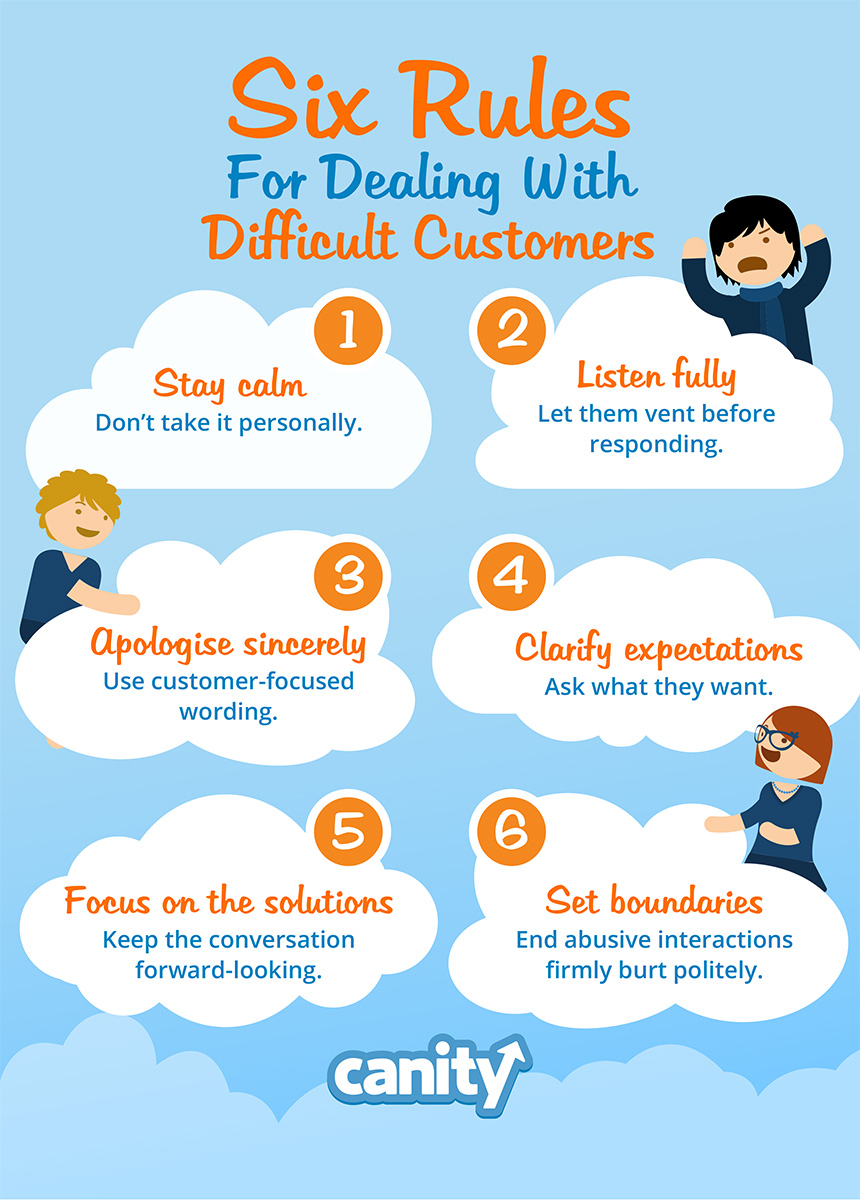
Step 1 – Let Angry Customers Vent
Angry customers need to release their frustration before they can hear solutions. This stage is uncomfortable, but it’s crucial.
Tips:
- Give your full attention and don’t interrupt.
- Let them speak until they’ve released their initial frustration.
- Take notes while they talk.
- When they finish, pause briefly and show empathy.
- Example: “I’d be upset too if that happened to me.” This signals that you’ve listened and understood, which helps build trust.
Step 2 – Apologise the Right Way
Apologies are powerful, but only if they’re sincere and customer-focused. Avoid saying:
“I’m sorry you feel that way” and “I’m very sorry about that!” These shift focus to you instead of the customer. A better approach would be: “John, please accept my apologies for the error.” and “I understand how upset you must be. I apologise that this has happened. Will you allow me the chance to fix this for you?” This empowers the customer and makes them more likely to calm down.
Step 3 – Ask the Customer What They Want
Instead of guessing at solutions, ask directly: “What would you like me to do to resolve this issue?” This shows respect, clarifies expectations, and gives you a strong starting point for negotiation.
Step 4 – Stay Solution-Focused
Your priority isn’t proving who’s right or wrong, it’s resolving the issue.
What to do:
- Redirect the conversation to solutions.
- Avoid dwelling on the problem once it’s clear.
- Frame responses positively.
- Example: “I understand the issue, and here’s what I can do to fix it today.” By staying solution-focused, you improve the chances of keeping that customer.
A Note on Abusive Customers
While handling frustration is part of customer service, abuse should never be tolerated. If a customer uses offensive language, try saying: “John, I want to help you, but I can’t do so if you continue to swear. Is that understood?” If it continues, say: “If the language continues, I’ll have no choice but to end this call. Is that clear?” If the abuse persists, end the interaction respectfully. Your dignity and safety come first.
Advanced Techniques for Handling Angry Customers
Active Listening
Use verbal cues like “I see” or “Absolutely”, and repeat back key points to show that you understand.
Positive Language
Reframe negative statements such as “I can’t process that today.” Instead say, “I’ll have that ready for you first thing tomorrow.”
Staying Neutral
Even if the customer is wrong, avoid arguing. Stay professional and guide the conversation toward resolution.
Final Thoughts
Difficult customers are unavoidable, but with the right customer service skills, you can turn challenging situations into opportunities. By letting them vent, apologising sincerely, clarifying expectations, and focusing on solutions, you’ll demonstrate professionalism and strengthen relationships.
At Canity, we provide short, practical lessons on a variety of topics such as Dealing with Difficult Customers, as well as phone etiquette, retail skills, sales, and email communication.
Explore our Customer Service Training Library to give your team the skills they need to handle any situation with confidence.
Frequently Asked Questions
How do you calm down an angry customer?
Stay calm, listen without interruption, acknowledge their feelings, and respond with empathy before moving to solutions.
What is the best way to apologise to a customer?
Use sincere, customer-focused apologies: “Please accept my apologies. Will you allow me the chance to fix this for you?”
What should you do if a customer is abusive?
Set clear boundaries. Warn them politely, and if necessary, end the call or interaction.
Why do customers become difficult?
Unmet expectations, lack of clarity, or the belief that anger gets faster results are common triggers.
How can I train my team to handle angry customers?
Use role-playing, empathy training, and structured customer service lessons to prepare staff for real-world situations.