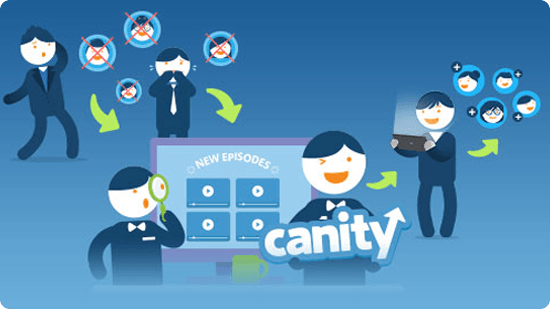






If you want better staff performance, it is tempting to reach for the classic “carrot and stick” approach: rewards for good work and consequences for poor work. Unfortunately, that approach often backfires.
Performance improves most reliably when people feel internally motivated. They want to do a good job, develop their skills, and feel that their work matters.
Kym Illman, Founder of Canity, sums it up well: people naturally want to improve, and they want their work to have purpose.
So how do you create that kind of motivation at work? Let’s break it down with a practical example and a set of leadership habits you can start using immediately.
Key takeaways
- Rewards can reduce performance on complex, creative, or thinking-heavy work.
- Fear and punishment create anxiety, not excellence.
- Intrinsic motivation grows when people have autonomy, mastery, and purpose (popularised by Dan Pink).
- Leaders can improve performance by connecting tasks to outcomes and recognising progress consistently.
Why the “carrot and stick” approach can hurt performance
Dan Pink explains (in an RSA animated video) why external rewards and punishments often fail, especially for modern knowledge work.

What can go wrong:
- Rewards can narrow focus. People optimise for the prize, not the purpose.
- Punishment creates stress. Anxiety rises, decision-making drops, and people play it safe.
- Motivation becomes transactional. Staff start asking, “What do I get?” instead of “How can I help?”
If you want consistent, high-quality performance, the goal is not bigger carrots. It is better internal drivers.
The real drivers of better performance: autonomy, mastery, purpose
A useful framework is:
- Autonomy: control over how work is done
- Mastery: getting better at something that matters
- Purpose: knowing your work helps someone, somewhere
When those are present, effort rises, standards rise, and people do more than the bare minimum because they want to.
A simple example: the hotel clerk with no purpose
Imagine a hotel clerk who feels disconnected from the guest experience. A small request becomes annoying.
“Why do these guests need an extra towel? What’s wrong with the three they already have?”
That reaction is rarely about laziness. It is often about meaning. If the task feels pointless, it becomes a chore. If the clerk cannot see the human outcome, there is no reason to care.
The bacon photo story: how purpose turns “work” into pride
An Elite Daily story describes a guest who added ridiculous “special requests” to a hotel booking, just to see what would happen. The request included:
- “Three red M&Ms on the counter. Not packages, just three single M&Ms.”
- “And a picture of bacon set on the bed. I love pictures of bacon.”
Months later, the guest arrived to find exactly that: three single red M&Ms and a framed bacon picture waiting in the room.
Then it escalated into a playful back-and-forth of increasingly absurd requests (pillow forts, costume photos, towel animals), met with unexpectedly great service.
Here’s the point: the staff were not just completing tasks. They were creating a story. They were making the guest’s stay memorable.
That is purpose in action.
When employees understand how their actions shape the customer experience, they do not need to be bribed to do great work. They start to take ownership.
Do your staff understand why their work matters?
Ask yourself:
- Do people understand how their work impacts customers or clients?
- Do they know what “great” looks like and why it matters?
- Do they feel safe to try, suggest, improve, and learn?
If the answer is “not really,” you have found your performance opportunity.
5 practical ways to build intrinsic motivation (and lift performance)
1) Start with the bigger picture before assigning tasks
In team and department meetings, connect work to outcomes:
- Who benefits?
- What problem are we solving?
- What does success look like for the customer?
This turns “do the thing” into “create the result.”
2) Give staff space to own ideas and lead small projects
Create room for initiative:
- a rotating “improvement champion”
- small experiments to reduce friction
- mini-projects staff choose and deliver
Autonomy increases engagement fast, especially in repetitive roles.
3) Set high standards and coach to them
High expectations work when paired with support:
- clear examples of great work
- timely feedback
- training and tools to improve
Do not accept “good enough” if you know the person can do better. Many people rise to the standard you consistently reinforce.
4) Recognise wins with the same energy you correct mistakes
If feedback is mostly negative, staff will protect themselves and stop stretching.
Make recognition specific:
- “You handled that complaint calmly and offered two solutions quickly.”
- “Your handover notes prevented a delay for the next shift.”
Specific praise strengthens mastery and repeats the right behaviour.
5) Listen actively and close the loop
Invite feedback, then show what happened next:
- “We heard you.”
- “We are doing X.”
- “We cannot do Y, and here is why.”
When people see their input taken seriously, they invest more of themselves.
A simple 30 day plan to improve staff performance
Week 1: Define what “great” means (examples, metrics, customer outcomes)
Week 2: Add autonomy (small decisions staff can own)
Week 3: Build mastery (micro-training, peer coaching, shadowing)
Week 4: Reinforce purpose (share customer stories, impact wins, review progress)
What to measure (so performance improves on purpose)
Pick 3 to 5 metrics that match the role:
- customer satisfaction (CSAT) or feedback mentions
- time to resolution
- rework or error rates
- quality checks passed
- retention, absenteeism, or schedule adherence
- team sentiment (quick pulse surveys)
Intrinsic motivation feels “soft,” but results are measurable.

FAQ
What is intrinsic motivation at work?
Intrinsic motivation is the internal drive to do work because it is meaningful, interesting, or helps you grow, not just because of rewards or fear.
Do rewards ever work for performance?
They can help with simple, repetitive tasks, but they often reduce performance on complex work that requires judgment, creativity, or problem-solving.
How do you motivate staff without money?
Increase autonomy, build mastery through coaching and growth, and connect tasks to real customer impact. Recognition and purpose go a long way.
What is the fastest way to improve staff performance?
Clarify expectations, provide frequent feedback, and connect everyday tasks to the outcome for customers or the team.